

Before and After Staging Transformations: Boost Your Home's Value
Discover how strategic staging can dramatically increase your property's appeal and financial return.
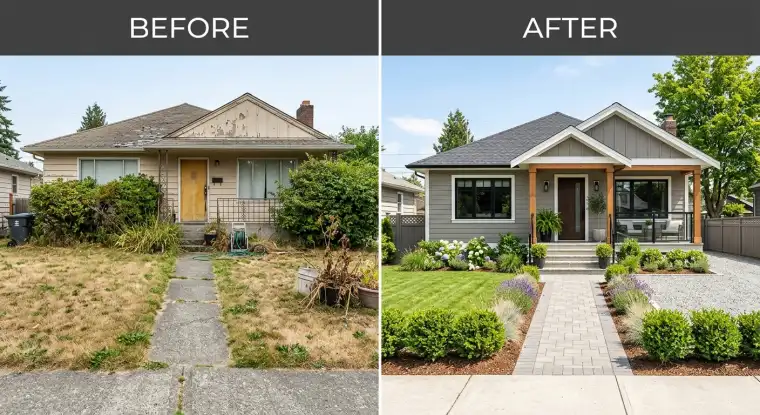
Imagine walking into a home that feels instantly welcoming, spacious, and effortlessly stylish. That's the power of home staging.
It's not just about pretty furniture. It is a strategic process designed to highlight your property's best features and attract the right buyers.
Are you ready to discover the secrets of staging and transform your property into a highly desirable, valuable asset?
Home staging helps increase a property's market value and attract potential buyers. By arranging furniture strategically, decluttering spaces, and improving curb appeal, home stagers create an environment that helps potential buyers see themselves living there. This guide explores the impact of home staging. You will see before-and-after examples and get tips to help you maximize your home's appeal and value. You will learn how to make your property stand out in a competitive market. You will learn about decluttering, optimizing space, and highlighting key features.
Quick navigation
The Financial Benefits of Home Staging
Home staging is a strategic investment with significant financial returns. By investing in staging, sellers often see an increase in their property's value. This leads to higher offers and a quicker sale. How does this work? What benefits can you expect?
Staged homes usually sell faster than unstaged homes. Staged properties create a good first impression. This makes buyers more likely to view the home and make an offer quickly. Staging also helps buyers imagine living in the space. This emotional connection can drive offers. By creating a lifestyle that buyers can see themselves enjoying, you increase the likelihood of a sale.
Staged homes often have a higher selling price. When a home looks its best, buyers are often willing to pay more. This is true in competitive markets. Home staging can be a cost-effective way to maximize your return on investment. The costs of staging are often less than the increased selling price.
What this means for you
The advantages for homeowners are clear. You will sell your home faster and for more money. You will reduce the time your property is on the market. This minimizes holding costs like mortgage payments, taxes, and insurance. A faster sale means less stress and more financial freedom. You can move forward with your plans sooner. These plans might include relocating, upgrading to a bigger home, or investing in other opportunities.
Home staging can help you make a great first impression. In today's digital age, buyers often start their search online. High-quality photos of a staged home will draw more interest. This leads to more showings and, ultimately, more offers. This early positive impression can set the tone for the entire sales process.
Home staging lets you make your property stand out. In a crowded market, staging helps your home stand out. By showcasing the property's best features, you can attract more qualified buyers. They will be more willing to pay the price you're asking. Home staging can be a simple investment with a big payout.
Key Staging Principles and Techniques
You should use key principles and techniques to stage a home effectively. One of the main principles is decluttering. Removing extra items and personal belongings creates a sense of space. It lets buyers focus on the home's architecture and layout. Neutralizing the décor is also important. Neutral colors and simple furnishings appeal to a broader audience. They let buyers imagine their own style in the space. Is that the key to a good staging job?
Lighting plays a crucial role in home staging. Good lighting can make a space feel brighter, more inviting, and more spacious. Use natural and artificial light. Open curtains and blinds to let in natural light. Use lamps and overhead lighting to illuminate dark corners. Arranging furniture strategically can also help. Proper placement can maximize space, highlight features, and create flow. Avoid overcrowding rooms. Arrange furniture to make it easy to move around.
Improving curb appeal is vital. Make a great first impression. Improve the exterior of your home. A well-maintained yard, fresh paint, and updated landscaping can increase buyer interest. Pay attention to the details. Small touches can make a big difference. Fresh flowers, decorative accents, and artwork can add personality and warmth to your home.
Enhancements That Significantly Increase Property Value
Certain improvements give you a higher return on investment. Renovating the kitchen and bathrooms is often at the top of the list. These are key areas that buyers focus on. Updating appliances, countertops, and fixtures can improve the home's value. What else can increase property value?
Curb appeal is another important area. Improving landscaping, adding fresh paint to the exterior, and upgrading the front door can create a positive first impression. These are affordable upgrades that can increase buyer interest. Improving flooring is also essential. Replacing old or damaged flooring with materials like hardwood or laminate can improve the home's appeal and value. Consider the importance of good flooring.
Energy-efficient upgrades can attract buyers and increase property value. Installing new windows, adding insulation, and upgrading heating and cooling systems can make the home more attractive to buyers. This can increase its long-term cost savings. Other improvements, like adding smart home technology, can also increase the property's value. Consider these improvements.
The Impact of Decluttering and Space Optimization
Decluttering and space optimization are vital parts of home staging. Removing extra items and personal belongings creates a sense of space. It lets buyers focus on the home's architecture and layout. Decluttering makes a home look bigger and more appealing. This makes it easier for buyers to imagine themselves living there. What else should you do?
Space optimization is another important factor. Proper furniture arrangement can maximize space and create a sense of flow. Avoid overcrowding rooms. Arrange furniture to make it easy to move around. Highlight features, such as fireplaces and built-in shelves. Maximize natural light by opening curtains and blinds. Use mirrors to make rooms feel larger and brighter.
Neutralizing the décor is another essential technique. Neutral colors and simple furnishings appeal to a broader audience. They let buyers imagine their own style and belongings in the space. Remove personal items such as family photos and personal collections. Staging is not about the current homeowner. It is about the prospective buyer.
Risks, trade-offs, and blind spots
While home staging offers benefits, it is important to consider potential risks, trade-offs, and areas where homeowners might overlook key details. One of the main trade-offs is the initial investment required for staging. While the cost is usually offset by the increased sale price, some homeowners may not want to spend money upfront. Where else could there be trouble?
Time is another factor. Preparing a home for staging can take time and effort. You must declutter, clean, make repairs, and improve the home. Homeowners with limited time or resources might find this process challenging. Misjudging the target audience can also be a risk. If the staging does not appeal to the intended buyers, it may not get the desired results. What else can you do to improve your odds?
Failing to address the property's flaws is another common blind spot. Small issues like cracked paint or outdated fixtures can make the home less appealing. Addressing these small issues is important. Focus on making repairs and improvements before staging. Consider all of these factors.
Common Factors That Can Devalue a Home
You must understand the factors that can devalue a home. It helps you address these issues before staging. One of the most important factors is deferred maintenance. Ignoring necessary repairs and maintenance can lower the home's value and appeal to potential buyers. Is that the most important thing?
Outdated features, such as old appliances, outdated fixtures, and worn flooring, can also devalue a home. Modernizing these elements is key to increasing the property's appeal. Poor curb appeal is another factor. A poorly maintained yard, lack of landscaping, and an unkempt exterior can keep buyers from entering the home. What else will turn buyers off?
Functional issues can devalue a home. Problems with the plumbing, electrical systems, or structural integrity can deter buyers. Addressing these issues is important. Finally, a cluttered or poorly designed interior can make a home feel smaller and less inviting. Decluttering and optimizing space are essential steps in staging a home for sale. Consider all of these factors.
Main points
- Home staging is a strategic investment. It can lead to higher offers and a quicker sale.
- Decluttering, optimizing space, and neutralizing décor are crucial for creating a welcoming atmosphere.
- Enhancements like kitchen and bathroom renovations, curb appeal improvements, and updated flooring can increase property value.
- Staged homes often sell faster and at a higher price than unstaged homes.
- Staging appeals to a broader audience. It allows buyers to better imagine themselves in the space.
- The investment in staging is often offset by the increased selling price.
- Home staging can help your property stand out in a competitive market.
- Addressing deferred maintenance and updating outdated features are crucial for maximizing value.
Are you ready to transform your home and maximize its value? Start by decluttering and making necessary repairs. Then, consider professional staging services to create a space that attracts buyers and drives offers. To take it one step further, explore decluttering tips to help sell your home. Good luck!