
Design Strategies for Maximizing Small Spaces: A Comprehensive Guide
Unlock the potential of your compact home with smart design choices.
Do you dream of a home that feels spacious, even if it's not? Small space living does not mean you have to sacrifice style or functionality.
From clever storage solutions to strategic furniture placement, there is a world of design possibilities waiting to be explored.
Discover how to transform your compact living areas into havens of comfort and style with our essential guide.
Living in a small space has unique challenges. It also offers the chance to get creative with design. The key is to maximize every inch, making your home feel larger and more functional. This guide explores design strategies for maximizing small spaces. It covers everything from decluttering and space-saving furniture to lighting and color schemes. These tips will help you make the most of your limited area, whether you have a tiny bedroom or a compact kitchen.
Use these design strategies to transform any small space into a comfortable and stylish home. Let's begin.
Quick navigation
Understanding Your Space and Needs
Before you start any design project, examine your space. What are its dimensions? How much natural light does it get? What are the current limitations? Assessing your space helps you identify its potential and challenges.
Then, consider your needs and lifestyle. How do you use the space? What activities are important to you? What are your storage needs? Understanding these aspects will help you design a space that works for you. Do you host guests often? Or is it mainly a space for relaxation?
Decluttering and Organization Essentials
Decluttering is often the first and most effective step in maximizing a small space. Less stuff means more room, both physically and visually. Start by removing items you no longer use, need, or love. Be ruthless. If you have not used something in a year, it is time to let it go. Would you like a clutter-free home? Read this guide to help declutter like a pro.
Once you’ve decluttered, focus on organizing what remains. Use smart storage solutions like shelves, drawers, and baskets to keep things tidy. Vertical storage is helpful in small spaces. Use walls with shelves and hanging organizers.
Smart Furniture Choices for Small Spaces
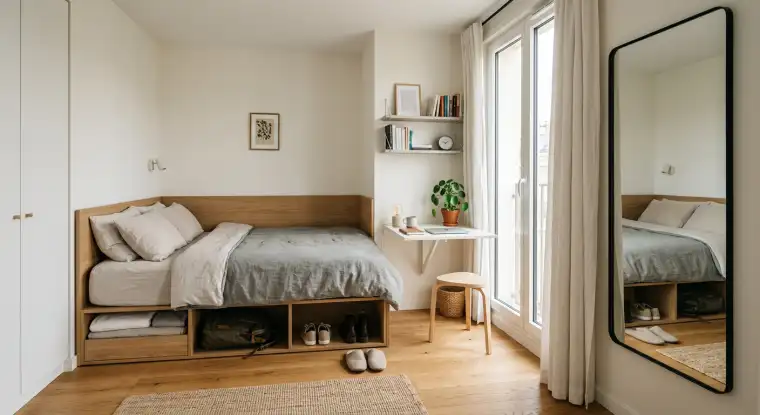
The right furniture can make a big difference in a small space. Choose furniture that serves multiple purposes, such as a sofa bed or a storage ottoman. Look for furniture with clean lines and a streamlined design to avoid overwhelming the space. Consider the size of your furniture. Oversized pieces can make a room feel cramped. Smaller, more delicate furniture can help create an airy feel.
Foldable or stackable furniture can also be helpful in small spaces. Consider a folding table that you can put away when not in use. Use stackable chairs for extra seating when needed. Remember to leave pathways open. Consider the flow of traffic in the space.
The Power of Light and Color
Lighting and color greatly affect how a space feels. Lighter colors reflect more light, making a room feel brighter and more spacious. Consider painting walls, ceilings, and even furniture in lighter shades. You can add pops of color with accessories and accent pieces.
Maximize natural light by keeping windows clear and using sheer curtains. Supplement natural light with a mix of ambient, task, and accent lighting. Consider adding mirrors to reflect light and create the illusion of more space. Is there anything more pleasing than a bright space?
Kitchen Design Strategies
The kitchen is often one of the most difficult rooms to maximize in a small space. Optimize your kitchen with these strategies. First, use vertical space with tall cabinets. Install shelves above the countertops for extra storage. Choose appliances scaled for small spaces. Integrate storage solutions within cabinets and drawers. Consider a kitchen island that provides extra counter space and storage, or a breakfast bar. A well-designed kitchen can make a small space feel open and efficient.
Bedroom Design Strategies
In the bedroom, the goal is often to create a sense of calm and relaxation. Choose a bed with built-in storage, such as drawers or a platform bed. Use floating shelves instead of bulky bedside tables to save floor space. Consider a minimalist approach to furniture, keeping only the essentials. Light colors, mirrors, and strategic lighting can help make a small bedroom feel more spacious and inviting.
Making the Most of Vertical Space
Vertical space is often underused in small rooms. Install shelves, wall-mounted storage units, and tall cabinets to maximize storage. Use the space above doors and windows. Consider a loft bed to create additional living space in a bedroom. Vertical storage not only increases storage capacity, but also draws the eye upward. This makes the room feel taller and more open.
Main points
- Declutter Regularly: Get rid of anything you do not need or use.
- Use Multi-Functional Furniture: Choose pieces that serve more than one purpose.
- Maximize Vertical Space: Install shelves and tall storage units.
- Lighten Up: Use light colors and maximize natural light.
- Organize Smartly: Implement effective storage solutions.
- Scale Down: Choose furniture proportionate to the room.
- Consider Layout: Plan the furniture layout carefully for optimal flow.
- Embrace Minimalism: Keep the essentials and avoid clutter.
Use these design strategies to transform your small space into a functional and stylish home. Are you ready to create a home that looks and feels more spacious? Start by assessing your current space and identifying areas where you can use these tips. Good luck!