
How Better Lighting Helps Small Rooms Appear Larger
Illuminate your space for maximum impact.
Do you dream of a home that feels open, airy, and inviting? The secret might be in your light fixtures.
Small rooms often feel cramped, but the right lighting can transform them into spacious havens.
Ready to unlock the secrets of lighting design? Let's dive in!
Good lighting is important in interior design, especially in small spaces. How you light a room changes its perceived size, mood, and look. Using good lighting can make a small room feel larger, more open, and better looking. This guide explains lighting design. It offers tips and techniques to help you change your space. We will examine lighting rules, such as the 3-lighting rule. We will see how these ideas can be used to get the most from your lighting plan.
Quick navigation
Understanding the Basics of Lighting Design
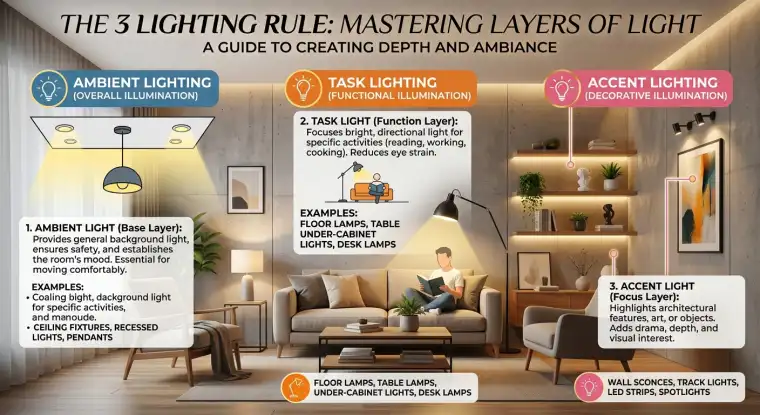
Before using specific techniques, you must understand the basic ideas of lighting design. Good lighting uses three key types: ambient, task, and accent lighting. Ambient lighting gives overall light, task lighting focuses on activities, and accent lighting highlights features or creates visual interest.
Think about how light and shadow work together, and how they change the look of a space. In small rooms, the goal is often to create a feeling of space. It is important to avoid harsh shadows and create a layered lighting plan.
Do you know how to choose the right balance?
The 3-Lighting Rule: A Foundation for Success
The 3-lighting rule is a key idea in interior design. It gives a clear way to light a room well. It uses three types of light to make a balanced lighting plan. This rule is not just about looks. It is about making a comfortable and useful living space. By adding ambient, task, and accent lighting, you can change a room from dark and uninviting to bright, useful, and visually appealing.
The first layer, ambient lighting, gives general light for the room. You can do this with ceiling fixtures like chandeliers or recessed lighting. You can also use floor lamps and table lamps that give soft, spread-out light. The goal is to give overall brightness without creating harsh shadows.
The second layer, task lighting, is for specific activities. Examples include desk lamps for reading, under-cabinet lighting in the kitchen for food preparation, or bedside lamps for reading at night. Task lighting should be placed to reduce glare and make sure tasks can be done comfortably.
The third layer, accent lighting, highlights features of a room, like artwork, architectural details, or decorations. You can use spotlights, track lighting, or wall sconces. Accent lighting adds visual interest, depth, and dimension to a space. It can also draw attention to focal points, making the room more engaging and visually dynamic.
Have you used this rule in your home?
Strategic Lighting Techniques for Small Spaces
Small spaces need careful lighting plans to make the most of them. Here are several techniques you can use to make a room feel larger and more open:
- Maximize Natural Light: Use natural light by keeping windows clear and using light-colored window coverings. Natural light helps a room feel brighter and more spacious.
- Use Light Colors: Light-colored walls and ceilings reflect light, making a room feel brighter and more open. Use white, cream, or pastel colors.
- Layer Your Lighting: As discussed, layering ambient, task, and accent lighting is key to a well-lit space.
- Install Mirrors: Mirrors reflect light and can visually expand a room. Place mirrors across from windows or light sources to get the most effect.
- Up-lighting: Use uplights to direct light towards the ceiling, which helps create the illusion of height and spaciousness.
- Recessed Lighting: Recessed lights give ambient lighting without taking up space. You can use them to create a clean, uncluttered look.
Will these strategies work for you?
Choosing the Right Light Fixtures
Choosing the right light fixtures is important for getting the lighting effect you want. In small spaces, choose fixtures that fit the room's size and match your design style.
- Ceiling Fixtures: Use flush-mount or semi-flush-mount fixtures to save space. Chandeliers can work if they fit the room.
- Table Lamps: Choose lamps that give task lighting without taking over the space. Consider lamps with adjustable arms or shades for focused light.
- Floor Lamps: Choose slim, space-saving floor lamps that give ambient or task lighting.
- Wall Sconces: Wall sconces can add accent lighting and save space. Choose sconces that match your decor and give the amount of light you want.
- Track Lighting: Track lighting is a good choice for small spaces. It lets you direct light where you need it most.
Which fixture is the best?
Color Temperature and Its Impact
Color temperature, measured in Kelvin (K), greatly changes the mood and look of a room. Choosing the right color temperature can make a space look bigger and change its feel. Warmer light (about 2700K-3000K) has a yellowish color and creates a cozy, inviting feel. This is good for living rooms and bedrooms.
Cooler light (about 3500K-4000K) has a bluish color and gives a brighter, more energetic feel. This is often good for kitchens, bathrooms, and home offices. For small spaces, use a mix of warm and cool light to create a balanced environment.
Did you know about color temperature?
What this means for you
Understanding and using these lighting ideas can greatly change your living space. By using the 3-lighting rule and these techniques, you can make your small rooms look larger, more inviting, and more useful. Remember to think about the balance of ambient, task, and accent lighting. Choose light fixtures and color temperatures that fit your design goals and what you like. Do not be afraid to experiment and change your lighting plan until you get the effect you want. Better lighting improves the overall look, making your home a better place to live.
Risks, trade-offs, and blind spots
While good lighting can help small spaces, you must think about possible risks and trade-offs. One problem is using fixtures that are too big or bulky. They can make a room feel cluttered and cramped. Another risk is depending too much on one type of light. This can create harsh shadows or an unbalanced feel. Also, avoid using very bright or cool lighting in living areas. It can make the space feel cold and sterile.
A blind spot to think about is the natural light available. A room with little natural light may need a more complete lighting plan. Always check the amount of natural light in a room before choosing artificial lighting. By knowing these possible issues, you can create a lighting plan that is both useful and looks good.
Main points
- The 3-lighting rule (ambient, task, and accent) is key to good lighting design.
- Techniques like using natural light and light colors can improve small spaces.
- Choose light fixtures that fit the room and match your design style.
- Color temperature changes the mood of a room. Use a mix of warm and cool light.
- Layering light and choosing the right fixtures greatly impact how large a room feels.
- Make sure you have enough natural lighting, so you know what extra lighting you need.
- Try different lighting techniques to find what works best for your space.
Ready to change your home? Use these lighting ideas and make a space that feels spacious, inviting, and well-lit. You could talk to a design expert. You could also research more helpful tips, like those found here: Declutter Like a Pro. You will be surprised by the change!