

How Mirrors Can Make Small Rooms Look Bigger: A Home Staging Guide
Transforming cramped spaces with the power of reflection.
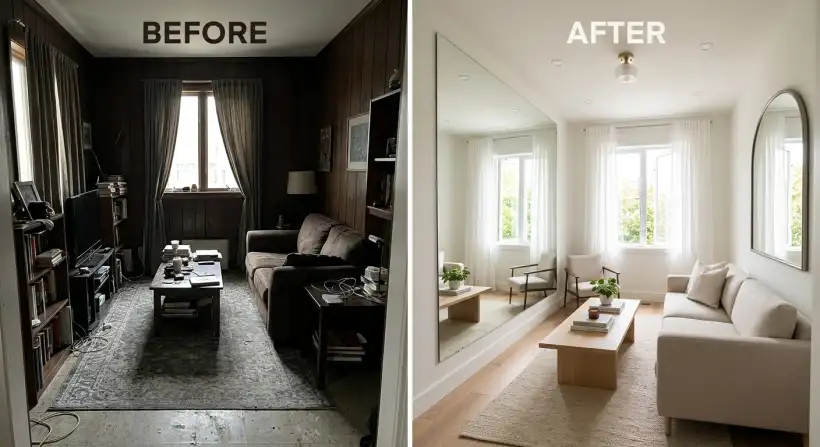
Do you feel squeezed in your home? Don't worry. A simple design element can make a room look bigger: mirrors.
Mirrors do more than help you check your appearance. They can change how a room feels. They make small spaces seem larger and brighter.
This guide will explain how mirrors work and give you tips for using them in home staging.
Mirrors have been in interior design for years. They reflect light and make a room seem larger. This is helpful in home staging. Place mirrors well, and you can change how a space feels. This guide explains how to use mirrors to make small rooms look bigger. It covers how reflection works and gives staging tips. This article will help you if you are a homeowner or a home stager.
Quick navigation
The Science Behind the Illusion
To use mirrors well, you must understand how they work. Mirrors create the illusion of space through reflection. When light hits a mirror, it bounces back. This makes a virtual image that seems to go beyond the room's walls. This reflection makes the room seem bigger and brighter. Think of the mirrored surface as adding to the room's size.
How does this work? The angle of the light that hits the mirror is the same as the angle of the reflection. Light bounces off the mirror at the same angle it hits it. This creates a matching image. This is important for making a space look bigger. If a mirror is in the right place, it can reflect the room's features, like windows and furniture. This blurs the lines between what is real and what is reflected.
The type of mirror also matters. Flat mirrors give the most accurate reflections. These are best for making a room seem bigger. Convex mirrors distort the image. This makes the space seem smaller, but it increases the field of view. This type of mirror has its uses, but it is not recommended for making a small space look larger.
Mirror Placement: Key Strategies
Where you put a mirror is important. Where you place a mirror affects how well it works. Think of a mirror as a window to a larger space. Placing a mirror across from a window is a good strategy. It reflects the view outside, bringing natural light and the outside world into the room. This makes the room seem bigger. It is like adding another window.
Consider the angle. A mirror angled to catch and reflect light can brighten the room. Even a small change can make a difference. Think about what the mirror reflects. Do not reflect clutter or bad elements. Reflect good things like art, plants, or other nice design elements. The goal is to make the reflection appealing and add visual interest.
Also, think about the size and shape of the mirror. A large, full-length mirror can make the space look twice as big. If you cannot use a large mirror, use a gallery wall of smaller mirrors. They may not make the room seem as big, but they can still brighten the room and add visual interest. Grouping mirrors can create a focal point and improve the look of the space.
What this means for you
For homeowners, mirrors are a simple and inexpensive way to change their living spaces. By using mirrors, you can make your home feel more comfortable, useful, and inviting. It is a simple design choice that improves your everyday living.
For home stagers, making a small room look bigger is important. It makes the room more appealing to potential buyers. Make the space seem larger and brighter, and you can create a better first impression and increase the chance of a sale. Using mirrors well can improve a property's presentation. It makes the property stand out in a competitive market. Are you ready to make your listings better?
Risks, trade-offs, and blind spots
Mirrors can improve a room, but there are things to avoid. One problem is overuse. Too many or poorly placed mirrors can make a space feel cluttered and confusing. Aim for balance in your design. Can you think of a time when too many mirrors made you uncomfortable?
Another risk is the reflection itself. A mirror reflects everything in its view, so ensure the reflection improves the room's look. Do not reflect clutter or bad elements. Also, the quality of the mirror matters. A bad mirror can distort the image. This can make the room look worse. Make sure the mirrors are in good condition and reflect an accurate image. Finally, think about the style of the mirror. A mirror that does not match the room's decor can be distracting and reduce the impact of the space.
Mirror Styles and Frames
The style of a mirror and its frame affects how it looks. The frame can match or contrast with the room's decor, adding to the look. Minimal frames, like thin metal or no frame at all, are good for small spaces. They create a clean look and do not take up space. Ornate or oversized frames can make a mirror the focus of attention.
Shapes are also important. A rectangular mirror is a classic choice. It reflects the room's features well. Round or arched mirrors can soften the space and add visual interest. The choice of frame and shape should match the room's design. For example, a rustic room might benefit from a framed mirror with a weathered finish. A modern space would suit a sleek, frameless mirror.
Lighting and Mirror Synergy
Mirrors and lighting work together to make a room seem bigger. Mirrors make light stronger, whether natural or artificial. Placing a mirror near a window maximizes the natural light. This makes the room feel bright and airy. It is like doubling the amount of light.
You can also use artificial lighting. Mirrors reflect light from lamps and ceiling fixtures. This increases the brightness of a room. Use a mirror to reflect a chandelier or a stylish floor lamp. This makes the room brighter and adds glamour. Try different light sources and mirror placements to find what works best.
Using Mirrors in Different Rooms
How you use mirrors depends on the room. In the living room, a large mirror across from a window or a gallery wall can make the space seem bigger. In the dining room, a mirror can reflect the dining table. This creates a more elegant and spacious feel. In the bedroom, a full-length mirror is necessary. It also adds to the room's design.
In the bathroom, a mirror above the sink is standard. You can also use mirrors to improve the room's look and function. A large mirror can make a small bathroom seem bigger. In the entryway, a mirror can create a welcoming and open atmosphere. It makes the space feel larger and more inviting. Remember that your home staging goals should match the room's purpose and design.
Main points
- Strategic Placement: Place mirrors across from windows to reflect natural light and views. Or reflect attractive design elements.
- Mirror Size and Shape: Use large mirrors to make the space look twice as big. Or consider a gallery wall of smaller mirrors.
- Frame and Style: Choose frame styles that match the room's decor. Use minimal frames for a clean look. Use ornate frames to make a statement.
- Lighting Synergy: Use mirrors to make both natural and artificial light sources stronger, increasing brightness.
- Room-Specific Applications: Use mirrors in each room to improve its look and function.
- Avoid Overuse: Be careful not to use too many mirrors. This can cause clutter or a confusing effect.
- Reflection Quality: Make sure mirrors are in good condition to avoid distortion and improve the reflection.
- Mirror Maintenance: Clean mirrors regularly to keep them clear and get the most from their reflective properties.
Understand how mirrors work and use these strategies to make small rooms look bigger. If you are a homeowner or a home stager, using mirrors can change your space. For more tips on decluttering and home staging, see decluttering and biophilic home staging.