

How Natural Light Affects a Home: A Home Staging Guide
Maximize appeal and value with strategic lighting techniques.
Have you ever walked into a home and instantly felt drawn in? Natural light likely played a big part.
Understanding how natural light affects a home is key for successful staging. It highlights details and creates a welcoming feeling.
Let's see how you can use natural light to make your home more appealing.
Natural light is very important in home staging. It can make or break a buyer's first impression. Sunlight can affect mood, improve looks, and increase a property's value. This guide shows you how natural light works. It gives you ways to use it well. We will talk about basic ideas. We will also talk about the 5-7 light rule. You will learn how to make your home feel warm and inviting.
Quick navigation
The Power of Natural Light in Home Staging
Why is natural light so important? It often comes up for homeowners and buyers. It can change a space. Natural light makes a room feel bigger, more inviting, and alive. It shows off the good parts of a property while hiding issues. How does this affect home staging?
Think about how it affects your mood. Natural light changes how you feel. Studies show sunlight makes you feel happier and calmer. This is what you want buyers to feel. A home with natural light feels inviting. It makes them want to stay, look around, and imagine living there.
Also, natural light makes a space look better. It brightens colors, textures, and details. They look more lively and nice. This is key for home staging. The goal is to show off a property's best features. Using natural light well can make a space look better and more appealing.
Understanding the 5-7 Light Rule
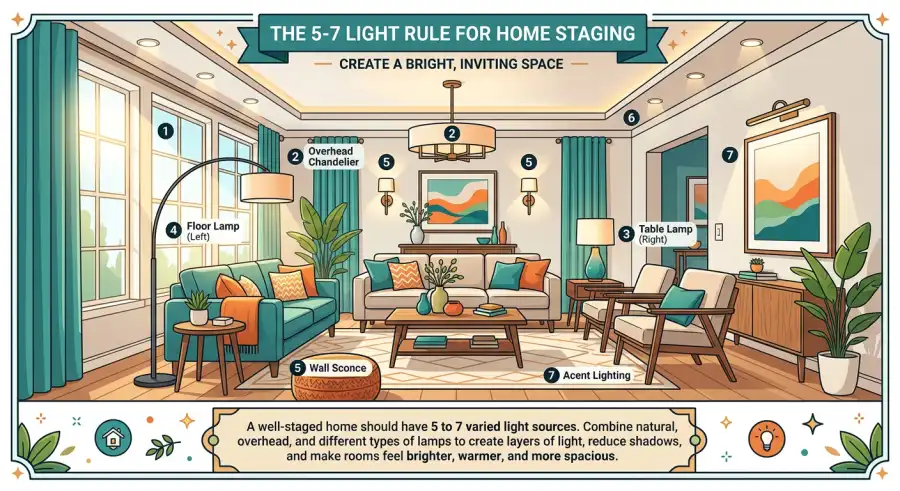
One of the main ideas in home staging is the 5-7 light rule. It is not a strict rule, but a guide. What does it mean? It is about how many lights you need in a room to make it well-lit. The numbers can change based on room size and shape. But the idea is the same: use many light sources to remove shadows and make the room inviting.
This rule says you should use at least five to seven light sources in a room. This includes natural light from windows and doors. It also includes artificial lights like overhead lights, table lamps, and floor lamps. The idea is to layer the lighting. This creates depth and dimension in the space. Think about the types of lights and how they work together. Do not just count the number of lights.
The goal is to remove shadows and make sure every part of the room has enough light. The number of lights you need depends on the room's size and shape. A bigger room may need more lights than a smaller one. Consider how the light works in the space. Things that reflect light, like mirrors or light-colored walls, can make the light sources seem stronger.
Creating a Light-Filled Atmosphere
How do you create a space that feels light and airy? First, look at the natural light in your home. See which rooms get the most sunlight and at what times. This helps you plan your lighting.
Here are some tips to improve natural light:
- Keep windows clean: Clean windows let more sunlight in.
- Use light-colored window coverings: Sheer curtains or blinds can spread light. They also give you privacy without blocking sunlight.
- Cut or remove any overgrown trees or bushes: This makes sure your windows are not blocked.
- Place furniture well: Arrange furniture to use the most natural light and not block windows.
- Use mirrors: Mirrors reflect light and make the space feel brighter and more open.
Using these tips will greatly improve the natural light in your home. This makes it more appealing to buyers. Remember, the goal is not only to make it brighter, but to create a welcoming and comfortable feeling.
Maximizing Natural Light in Different Rooms
Each room in your home is different. So, you may need different ways to use natural light. What can you do to use the most natural light in different parts of your house?
Living Room: This is often the main part of a home. Make sure your window coverings let in as much light as possible during the day. Use a big mirror to reflect sunlight and make the room look bigger. Light-colored furniture and rugs will also help brighten the area.
Kitchen: Kitchens do well with natural light. Keep windows clear. If possible, add a skylight or sun tunnel. Make sure work areas have good lighting from overhead and task lights.
Bedroom: Bedrooms should feel peaceful and comfortable. Use light-colored bedding and curtains. Place the bed to use the natural light. Do not use heavy or dark furniture, which can absorb light.
Bathroom: Bathrooms can be tough for natural light. Use mirrors to reflect any light. Use light-colored tiles and fixtures. If you can, add a skylight or window to improve the natural light.
The Impact of Artificial Lighting
Natural light is the main focus in home staging. But artificial lighting also helps. What does artificial light do?
Artificial lighting adds depth and dimension to a space. It makes sure every area has enough light. Use a mix of lights to create layers. Use ambient, task, and accent lighting. Ambient lighting lights the whole room. Task lighting is for specific jobs. Accent lighting highlights areas or features.
Think about the color of your light bulbs. Warm white light (2700K-3000K) creates a cozy and inviting feeling. Cool white light (3500K-4000K) is better for task lighting. Make sure all lights are clean and work. Replace any burned-out bulbs.
Using artificial lighting well can help make a balanced and appealing space. It works with and improves the effect of natural light. This mix of natural and artificial light is key to creating a welcoming atmosphere.
What this means for you
Understanding how natural light affects a home is important for anyone staging a home. Use these tips to improve a property and make it more inviting for buyers.
Using light well can help you show off a home's best features. This makes it more appealing to buyers. This can lead to faster sales and higher offers. This is a key plan when you want to make a good first impression.
Think about your plan. A well-lit home is a welcoming home. It can help you make an emotional connection with buyers. Making these simple changes can make a big difference. Keep this in mind when you prepare a house for a showing.
Risks, trade-offs, and blind spots
Natural light has many benefits. But there are also some issues to think about. What are some of the possible downsides?
Relying too much on natural light can be an issue. In rooms with little sunlight, you will need to use more artificial lighting. The lack of the right light may make a room feel small or dark. Use mirrors and light-colored furniture to help. But be aware of how the light will affect each room.
Another blind spot is the time of day. Natural light changes during the day. It is important to stage a home when the light is best. Know how the sun's position will affect each room. Plan your staging accordingly. Lastly, think about the weather. Cloudy days can reduce natural light. Have artificial lighting ready when you need it.
Main points
- The Power of Light: Natural light greatly affects mood. It creates a welcoming atmosphere.
- The 5-7 Rule: Use at least five to seven light sources (natural and artificial) in a room.
- Optimize Windows: Keep windows clean. Use light-colored coverings. Remove things that block the windows.
- Room-Specific Strategies: Change your lighting plans for living rooms, kitchens, bedrooms, and bathrooms.
- Artificial Lighting: Layer ambient, task, and accent lighting to work with natural light.
- Color Temperature: Use warm white light for feeling and cool white light for tasks.
- Daylight Advantage: Stage homes when the natural light is best.
- Consider Weather: Have enough artificial lighting for cloudy days.
Use these ideas to change a home into a bright and inviting space. This attracts buyers and makes the home worth more. Want to get better at home staging? Check out decluttering tips and learn how to present a well-lit home in its best light.