
How to Sell a House ‘As Is’: A Comprehensive Guide
Understand the process, pros, cons, and potential pitfalls of selling your home in its current condition.
Do you have a leaky roof, an outdated kitchen, or a long list of needed repairs? Selling your house “as is” might seem like a quick solution. Is it the right choice for you?
This guide explains selling a property in its current condition. It helps you handle the difficulties and make the best decision for your situation.
We’ll give you the knowledge you need to approach this real estate transaction with confidence. We cover everything from the implications to the alternatives.
Selling a house “as is” means you offer your property in its current state. You do not make any repairs or improvements before the sale. This approach can be appealing for different reasons. It also has challenges. This guide offers a complete look at the process. It examines the pros and cons, financial effects, and ways to get the best outcome when selling your house.
Understanding the “as is” sale is important, whether you have a fixer-upper or want a faster sale. Let’s look at what you need to know to make a good decision.
Quick navigation
What this means for you
When you sell your house “as is,” you tell potential buyers that the property is sold in its current condition. It has all its existing problems and issues. This includes everything from small imperfections to major structural problems. Buyers accept they are responsible for any needed repairs or renovations after the purchase. This is different from normal sales where sellers often make repairs based on inspection results.
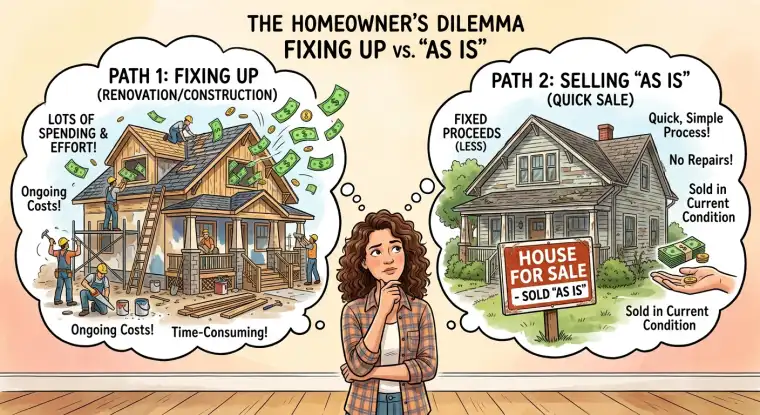
This approach simplifies the selling process. You do not need to make repairs. This can save you time, money, and stress. But, it usually means you get a lower sale price than in a normal sale. The price reflects the buyer’s assumption of the costs and risks of fixing up the property. Is selling “as is” right for you?
The Benefits of Selling ‘As Is’
Selling a house “as is” offers several advantages. This is especially true for sellers who need a fast and easy transaction.
- Speed and Efficiency: The process is often faster. You do not have the delays of repairs. This can speed up the closing time.
- Reduced Upfront Costs: You avoid the costs of making repairs or improvements. This is good if you do not have money for renovations or do not want to invest in a property you will sell.
- Simplified Process: There is less involvement from contractors and inspectors. This streamlines the entire sale.
- Attractive to Certain Buyers: “As is” properties appeal to investors, house flippers, and buyers looking for a deal. These buyers are willing to handle renovations themselves.
- Avoidance of Negotiation Headaches: The negotiation process can be less difficult. There are fewer issues related to repairs.
Drawbacks and Potential Pitfalls
Selling “as is” has benefits, but it also has downsides. Understanding these potential problems can help you prepare and make good decisions.
- Lower Sale Price: The main disadvantage is you will probably get a lower sale price. Buyers will consider the cost of necessary repairs.
- Limited Buyer Pool: The market for “as is” properties is often smaller. It excludes buyers unwilling or unable to handle repairs.
- Disclosure Requirements: You still must disclose known issues with the property. Not doing so can cause legal problems later.
- Inspection Contingencies: Buyers might still ask for an inspection to check the property's condition. This could lead to a lower price or the deal falling apart if problems are found.
- Difficulty Securing Financing: Buyers may have trouble getting a mortgage if the property has major structural problems. Lenders might require repairs before approving a loan.
Preparing Your Home for Sale ‘As Is’
Even when selling “as is,” you can take steps to make your property more attractive and increase its marketability.
- Clean and Declutter: A clean and organized home always makes a better impression. Remove personal items and clean thoroughly.
- Address Safety Hazards: Make sure the property is safe. Repair obvious hazards, like loose railings or exposed wiring.
- Provide Disclosures: Be honest about any known problems. A detailed disclosure can build trust and prevent future legal issues.
- Gather Documentation: Have any records of past repairs, inspection reports, and warranties ready.
- Price Competitively: Research similar sales in your area. Determine a competitive, “as is” price.
Pricing Strategies for ‘As Is’ Sales
Setting the right price is important when selling “as is.” A well-calculated price can attract buyers while still considering the property's condition.
- Comparative Market Analysis (CMA): Analyze recent sales of similar properties in your area. Adjust for your home's condition.
- Factor in Repair Costs: Estimate the cost of necessary repairs. Deduct that from the market value.
- Consider Market Conditions: In a buyer’s market, you may need to price more aggressively to attract offers.
- Get a Professional Appraisal: An independent appraisal can provide an objective assessment of your property’s value. This helps you set a fair price.
- Be Realistic: Do not overestimate your property’s value. Buyers are looking for a deal.
Negotiating Offers and Closing the Deal
The negotiation process requires strategy and flexibility. Here is what to consider.
- Review Offers Carefully: Pay close attention to all terms, including the offer price, contingencies, and closing date.
- Counteroffers: Be ready to negotiate. You can counter the offer price, contingencies, or other terms to reach a deal both sides agree on.
- Address Inspection Issues: If an inspection shows unexpected problems, you can lower the price, make minor repairs, or refuse to address the issues.
- Closing Procedures: Make sure all required documents are in order. You and the buyer must meet all closing requirements.
- Legal Advice: Talk to a real estate attorney to review all contracts and protect your interests.
Alternatives to Selling ‘As Is’
Before selling “as is,” consider these alternatives. They might result in a higher sale price.
- Making Minor Repairs: Addressing the most important issues, like fixing leaks or updating the kitchen, can increase your property's value. Consider staging your home to make it more appealing.
- Home Improvements: If you have the time and resources, consider more renovations.
- Listing with a Realtor: A real estate agent can market your home better. This may attract more buyers.
- Cash Buyers: Selling to cash buyers is another option. These buyers usually buy properties in their current condition. They may offer a higher price than individual buyers.
Risks, trade-offs, and blind spots
Selling a home “as is” is not always the best solution. Here are key things to know.
- Undisclosed Problems: Always disclose known issues. But, hidden problems could lead to legal problems.
- Negotiation Challenges: Buyers may want lower prices during negotiations based on inspection results.
- Market Fluctuations: The housing market affects how much you get, no matter your strategy.
- Opportunity Costs: You might earn more by fixing up your home. But this would require time, effort, and money.
Main points
- Selling “as is” means selling your property in its current state. You do not make any repairs.
- The main benefits include a quick sale, lower upfront costs, and a simpler process.
- Disadvantages include a lower sale price and fewer potential buyers.
- Proper preparation involves cleaning, addressing safety hazards, and providing detailed disclosures.
- Pricing should be based on a comparative market analysis. Factor in repair costs and market conditions.
- Negotiations may involve counteroffers and addressing inspection results.
- Alternatives to selling “as is” include making repairs, renovations, and listing with a realtor.
Selling your home “as is” can be a convenient choice. Assess your situation. Weigh the pros and cons. Consider all options. Make a decision that fits your goals and financial situation.