

How the Wrong Furniture Choices Can Ruin Your Space
Avoid these common mistakes to create a harmonious and functional home.
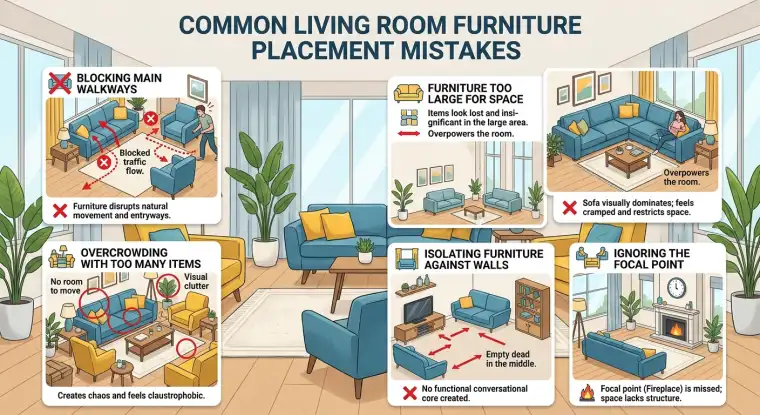
Have you ever walked into a room and instantly felt…off? The furniture might be the culprit, even if you can’t quite put your finger on it.
Choosing the right pieces and arranging them thoughtfully is more important than you think. It can transform a house into a home.
This guide will help you sidestep common furniture faux pas and create spaces that are both beautiful and functional.
Your furniture does more than just fill a space. It shapes how you experience it. The wrong choices, from large sofas to badly placed rugs, can disrupt the flow. They can make a room feel cramped, or fail to create the atmosphere you want. Understanding furniture arrangement is key to making the most of your living spaces. This means selecting the right pieces and knowing how to position them. This maximizes comfort, functionality, and how things look. This guide explores common problems and gives advice for creating a home that reflects your style. It also helps you enhance your daily life.
Before you start, learn about decluttering techniques to improve your space.
Quick navigation
- Understanding the Fundamentals of Furniture Arrangement
- Common Furniture Arrangement Mistakes
- The Importance of Scale and Proportion
- Creating Functional Zones
- Applying the Design Rules: 2/3, 3/4/5, and 60/40
- Lighting and Furniture: A Perfect Match
- What this means for you
- Risks, trade-offs, and blind spots
- Main points
Understanding the Fundamentals of Furniture Arrangement
Good furniture arrangement is about more than looks. It's about creating spaces that are easy to use and comfortable. It should fit the activities you enjoy. It’s a balance of form and function. You need to think about how you live and interact with your home.
One of the most important things is flow. Think about how you move through a room. Furniture should guide your eye and body. It should avoid obstacles and create clear paths. This involves considering doors, windows, and other features. Furniture should work with these features, not block them.
Another fundamental is balance. This doesn't mean everything has to be the same. Symmetry can create order and calm. Balance can also be achieved through asymmetry. You can distribute the visual weight of items to create a good composition. You might put a large sofa opposite a smaller loveseat, or balance a tall bookcase with a shorter coffee table.
How do these fundamentals affect your ability to create a comfortable home?
Common Furniture Arrangement Mistakes
Many mistakes can hurt even the best decorating plans. Recognizing these mistakes is the first step to avoiding them.
One common error is overcrowding a room. This often happens when people try to put too much furniture in a space. This makes the room feel cramped and uncomfortable. It’s important to think about the room's size and choose furniture accordingly. Leave enough space to move around and avoid blocking pathways.
Another mistake is ignoring the focal point. Every room should have a main feature, like a fireplace, a large window, or a piece of art. Arrange furniture to draw attention to this focal point. This might mean placing seating to face the fireplace or positioning a sofa to showcase a view.
Finally, not considering the room's purpose can be a problem. A living room should encourage conversation and relaxation, while a home office should support productivity. The furniture arrangement should align with these goals, creating areas for different activities.
What are some other common mistakes to be aware of when arranging your furniture?
The Importance of Scale and Proportion
Scale and proportion are basic design principles that affect how a space looks. Scale is the size of an object compared to other objects in the room. Proportion is the relationship between the size of an object and the overall size of the space.
When choosing furniture, think about the scale of each piece in relation to the room. A large sofa can overwhelm a small living room, while a small loveseat might get lost in a large area. Choose furniture that fits the space. Leave enough room for movement and comfort.
Proportion is also important. Make sure the different elements in a room have a balanced relationship. The height of a coffee table should match the height of the sofa. The size of artwork should fit the wall space. Pay attention to how different elements relate to each other.
How can you use scale and proportion to create a better environment?
Creating Functional Zones
Effective furniture arrangement lets you create zones within a room. Each zone is for a specific purpose. This is important in open-plan living spaces. Different activities, like lounging, dining, and working, may happen in one area.
Think about the activities you will do. Arrange furniture to help with these activities. In a living room, create a conversation area with seating around a coffee table. In a dining area, put the table near natural light. If you have a home office, set up a quiet corner for work.
Use furniture to define the boundaries of each zone. A rug can anchor a seating area. A bookshelf can separate a living room from a dining space. Consider the flow between zones. Make sure each area is easy to access without disrupting the others.
What are some creative ways to define different zones in your home?
Applying the Design Rules: 2/3, 3/4/5, and 60/40
Design rules offer guidelines to create visually appealing and balanced spaces. Knowing a few key rules can improve your arrangement skills.
The 2/3 rule suggests that when hanging art or arranging objects, it often looks good to have two-thirds of the height or width covered. This creates balance and harmony. It leaves some open space while still making a statement.
The 3/4/5 rule is often used in outdoor spaces. It can be adapted for indoors. It's used to create steps or levels. Imagine a deck with 3 levels that are 4, 5, and 6 feet wide. Using this rule creates balance and ease for your eyes.
The 60/40 rule relates to color palettes. The main color should take up about 60% of the space. A secondary color should take up about 30%. An accent color should take up the remaining 10%. This helps create a cohesive and interesting environment. Use this when choosing paint colors, upholstery, and decorative items.
How can you use these rules in your home design?
Lighting and Furniture: A Perfect Match
Lighting is important in any space. How it interacts with furniture affects the room's atmosphere and how it functions.
Consider the type of lighting you need. Ambient lighting provides general light. Task lighting is for specific activities, like reading or working. Accent lighting highlights features and adds interest. Choose furniture that complements your lighting plan. A floor lamp can provide task lighting for a reading nook. A table lamp can add ambient light to a living room.
Think about where you put light sources. Place lamps and fixtures to light the areas where you need light. Make sure the lighting doesn't create harsh shadows or glare. Consider the benefits of biophilic design principles to improve your space.
How do your choices about lighting change your spaces?
What this means for you
Understanding and using furniture arrangement is an ongoing process. As your needs change, so should your furniture arrangement. Regularly check your space and adjust your layout. Do this as needed to maximize comfort, function, and how it looks.
Do not be afraid to experiment. Move furniture around, try different layouts, and see what works best. What feels right is the most important factor. With planning and effort, you can create a home that reflects your personality and improves your daily life.
Why is it important to experiment and create a comfortable and visually appealing home?
Risks, trade-offs, and blind spots
When arranging furniture, there can be problems. Poor choices can lead to a space that is not inviting or functional. If you overfill a room, it can look cramped, which can be uncomfortable. It is important to consider the size of your furniture and the room.
Another trade-off is often between style and practicality. Certain design choices, while they look good, might not be the most functional for your life. A sleek but uncomfortable sofa may look great but not be ideal for everyday use. Think about your main needs.
Finally, always keep an open mind when you consider your space. Consider all options, and do not hesitate to change your perspective.
What are some other ways you can balance trade-offs and consider possible pitfalls when you design your space?
Main points
Here's a summary of the key takeaways to guide your furniture arrangement:
- Focus on function and flow when arranging your furniture.
- Avoid overcrowding rooms by choosing furniture that fits the space.
- Find a focal point and arrange furniture to highlight it.
- Create zones for different activities.
- Use the 2/3, 3/4/5, and 60/40 design rules for balance.
- Think about how lighting and furniture work together to improve the atmosphere.
- Check and adjust your furniture arrangement as needed.
- Experiment with different layouts to find what works best.
Now you have the tools to make good furniture choices. You are ready to change your living spaces. By focusing on the basic principles, avoiding common mistakes, and understanding how design elements work together, you can create a home that is both beautiful and functional. Take the time to experiment and create a space that reflects your personality. It should also support your lifestyle. Start rearranging!