
Layered Lighting Techniques for Modern Homes: A Comprehensive Guide
Illuminate Your Space with Style and Functionality
Do you feel a certain mood when you enter a room? Lighting is key to that experience.
Layered lighting creates a dynamic and functional atmosphere in your home.
This guide explores layered lighting. It will help you transform your modern home into a well-lit space.
Layered lighting uses different light sources to create an environment. This guide will show you how to master layered lighting in your home. You will learn the techniques and principles. You will improve your home's look and function. You can update your living room, bedroom, or bathroom. Understanding layered lighting makes a big difference. Let's make your home brighter and more beautiful.
Quick navigation
Understanding the Layers of Light
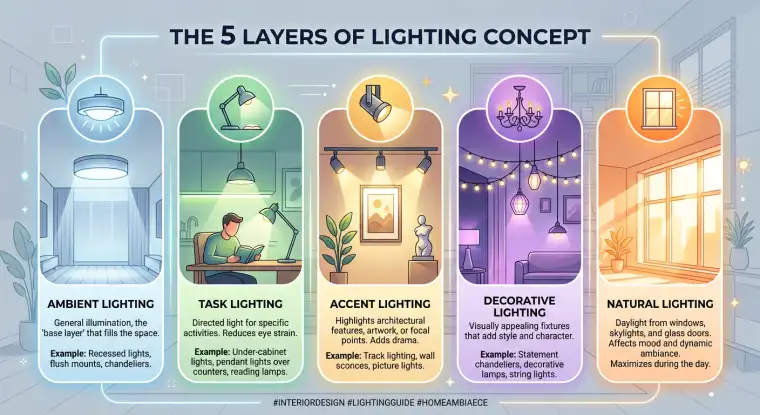
Layered lighting uses multiple light sources. This creates a balanced lighting scheme. This approach uses three main types of light: ambient, task, and accent. Each layer has a purpose. They work together to improve the space's use and look. What are these layers? How do they affect the atmosphere?
Ambient lighting provides general light for a room. It sets the overall tone and brightness. Task lighting focuses on specific areas. People read, cook, or work in these areas. Accent lighting highlights features. It adds visual interest and depth. Understanding these layers is key. You can then create a lighting design that is both practical and appealing. Consider how each layer works to get the effect you want.
Ambient Lighting: Setting the Base
Ambient lighting is the start of any lighting scheme. It is the general light that fills a room. It lets you move around safely and comfortably. Think of it as the base layer. It sets the mood and brightness. What are the best ways to use ambient lighting?
Common sources of ambient light include ceiling fixtures. Examples are chandeliers and recessed lights. Wall sconces and floor lamps also help. When you choose ambient lighting, consider the room size and desired atmosphere. A living room might need a dimmer switch. You can then adjust the brightness. Do this based on the time of day or the activity. The goal is to provide soft, even light. This prevents harsh shadows and creates a welcoming environment. Selecting the right color temperature is also important. It affects the room's mood. Warm light creates a cozy feel. Cool light offers a modern and energetic atmosphere.
Task Lighting: Focused Illumination
Task lighting provides focused light for specific activities. It helps you see well. You can then do tasks comfortably and safely. Task lighting improves visibility and reduces eye strain. How do you add task lighting to your spaces?
Examples of task lighting include desk lamps and under-cabinet lights. Bedside reading lights are also task lighting. The key is to put the light source where you need it. For reading, use a lamp with an adjustable arm. You can then direct the light. In the kitchen, under-cabinet lighting lights up countertops. This makes food preparation easier. In a home office, a desk lamp with adjustable brightness is essential. When planning task lighting, think about the activities in each area. Choose fixtures for those tasks. The goal is to create a well-lit, functional space. This space will support your daily activities.
Accent Lighting: Highlighting Features
Accent lighting highlights features. It adds visual interest to a room. It is the decorative layer. It draws attention to art, details, or other focal points. What are the key strategies for using accent lighting?
Common forms of accent lighting include track lighting and spotlights. Picture lights are also accent lighting. Use these fixtures to light up art. You can also highlight architectural features. Use them to create dramatic effects. The key is to use accent lighting to create focal points. You can then add depth to the space. For example, use uplighting to highlight a wall's texture. Use a spotlight to draw attention to a painting. Consider the color temperature of your accent lights. Warmer tones create a welcoming atmosphere. Cooler tones add a modern edge. Think about the placement and intensity of your accent lights. Then you can get the desired effect. You will also create a visually appealing environment.
Layering Lighting in the Living Room
The living room is the center of the home. It is for relaxing, entertainment, and socializing. Use layered lighting in the living room to create a versatile atmosphere. How can you combine the three light layers to get the right balance?
Start with ambient lighting. A central chandelier or recessed lighting can provide general light. Add task lighting with floor lamps or table lamps. Use these near seating areas for reading or other activities. Finally, use accent lighting to highlight art, a fireplace, or features. Dimmer switches are useful here. Adjust the lighting based on the time of day or activity. For example, use bright ambient and task lighting during the day. Dim the lights in the evening. Add accent lighting to create a cozy, relaxing ambiance. Think about your furniture and the room's activities. This will help you optimize your lighting plan. Well-planned lighting can improve your home's appeal. Learn more about decluttering strategies at decluttering techniques. These will help you create a brighter home.
Layering Lighting in the Bedroom
The bedroom is a place for rest and relaxation. Layered lighting in the bedroom should create a calming environment. What techniques and fixtures work best for this space?
A ceiling fixture or wall sconces can provide ambient lighting. Task lighting is essential for reading. Bedside lamps are a must. Consider lamps that adjust. You can direct the light. Use accent lighting to highlight art. You can also create a soft glow. Choose warm-toned bulbs to help you relax and sleep. Dimmers are useful in the bedroom. You can adjust the brightness to fit your mood. A well-lit bedroom should be both practical and inviting. Well-designed lighting can improve your staging and home look. Consider also the principles of biophilic home staging.
Layering Lighting in the Bathroom
The bathroom needs a unique approach to layered lighting. It focuses on function and safety. The goal is to light up grooming tasks. You also want to create a relaxing atmosphere. What are the important things to think about for bathroom lighting?
A central ceiling fixture or recessed lights can provide ambient lighting. Task lighting is key around the vanity. Use vanity lights, sconces, or both. Make sure the lighting is bright enough for tasks. These include applying makeup or shaving. Also think about the overall feel. Accent lighting can highlight features. It can also add a touch of luxury. Always use fixtures that resist moisture. Think about light placement to avoid shadows. Good lighting in the bathroom helps with function and looks. It helps create a comfortable and safe environment. Think about the overall feel. Consider how the lighting matches your decor.
Main points
Layered lighting is important in modern home design. It improves how your living spaces work and look. You can change any room into a well-lit space. Understand and use ambient, task, and accent lighting. Here is a review of the key points:
- Understand the Layers: Ambient, task, and accent lighting each have a purpose. They create a balanced lighting scheme.
- Ambient Lighting: Provides general light. It sets the mood and overall brightness.
- Task Lighting: Focuses on specific areas. People read, cook, and work in these areas.
- Accent Lighting: Highlights features. It adds visual interest and depth.
- Living Room: Combine ambient, task, and accent lighting. This creates versatility and ambiance.
- Bedroom: Focus on a calming environment. Use warm-toned bulbs and dimmers.
- Bathroom: Focus on function and safety. Use fixtures that resist moisture. Place them correctly.
- Experiment and Adapt: Change your lighting scheme to fit your needs and preferences.
You can change your home into a beautiful and functional space. Learn layered lighting techniques. Start experimenting with different light sources. Try different arrangements. You can find the best lighting for each room. With some planning, you can improve your home's look and use. You can also learn from biophilic design to further improve your home staging.