

This Is Why Your House Isn't Selling: Common Reasons and Solutions
A comprehensive guide to understanding and overcoming the obstacles to selling your home.
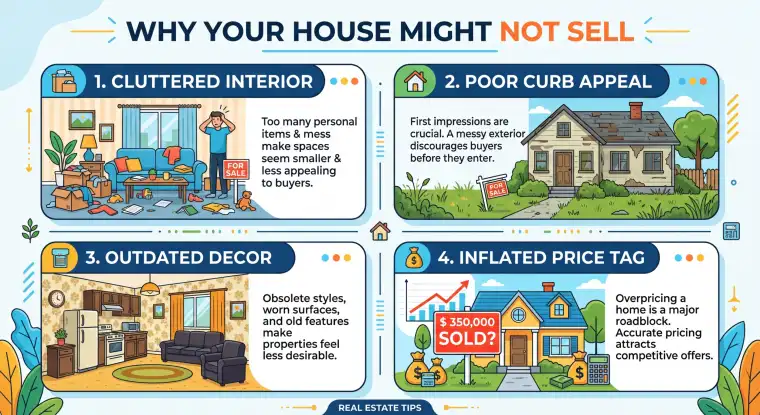
Is your 'For Sale' sign still up after weeks or months? You are not alone. Many homeowners face trouble selling their homes.
Several things can keep buyers away. These include overlooked repairs and unrealistic prices. This guide explains common problems and offers strategies to solve them.
Let's change your 'For Sale' sign from a source of stress to a sign of hope. We will help you sell your home successfully.
Selling a home is a big task. It often involves money and emotions. It is natural to worry when your house stays on the market. Understanding the reasons for this can help you take action. This guide covers common issues that prevent a home sale. It also provides solutions to help you sell your property.
Quick navigation
Unrealistic Pricing
One main reason a house does not sell is overpricing. Sellers often think their property is worth more than it is. This happens because of attachment or a lack of understanding of the current market. Overpricing reduces the number of potential buyers. Buyers compare listings. They often ignore overpriced properties. The longer a house stays on the market, the more buyers may think something is wrong with it. This hurts its appeal.
Have you checked recent sale prices of similar properties in your area? Are you sure about your pricing strategy?
Poor Curb Appeal
First impressions are important. The outside of your home is what potential buyers see first. Poor curb appeal can stop buyers before they go inside. This includes a messy yard or an old-looking exterior. Buyers want to see themselves in a well-kept home. A bad exterior suggests the inside may also be in poor condition. Improving curb appeal is a cheap way to increase your home's appeal. It will attract more potential buyers.
Does your home's exterior attract or repel buyers? Are there easy improvements you could make?
Inadequate Marketing
Good marketing is important in today's real estate market. Bad marketing can limit your home's exposure. This includes poor photos, no online presence, or short descriptions. Many buyers start their search online. If your listing does not stand out or is hard to find, you lose potential buyers. Using professional photos, virtual tours, and detailed descriptions is essential.
Does your home's listing get attention online? Are you using the newest tools to show off your property?
Property Condition Issues
Buyers are careful of properties with maintenance problems. Problems like leaky roofs, outdated systems, or structural issues can stop buyers. Even small issues, like chipped paint or worn flooring, can make buyers hesitate. Buyers often consider repair costs when making an offer. Fixing these issues can help you get a higher sale price. It also attracts more serious buyers. Consider getting a pre-listing inspection to find and fix any potential problems.
Are you aware of any issues that could turn off buyers? Have you considered a pre-listing inspection?
Market Factors and Timing
The real estate market changes. It is affected by outside factors. Changes in interest rates, economic problems, or seasonal shifts can affect home sales. It is important to understand the current market in your area. Change your strategy as needed. Timing can also be important. Selling during spring or summer often gives better results.
Do you know how market conditions affect your sale? Have you considered the best time of year for your sale?
What this means for you
When your house does not sell, it can cause stress. This stress can be financial and emotional. You may worry about money the longer your property is on the market. You may face higher costs, like mortgage payments and property taxes. The uncertainty can also be emotionally draining. Addressing these factors can greatly affect your property's sale and your peace of mind.
Taking control of these factors can help you avoid financial strain. It also creates a smoother, less stressful selling experience.
Risks, trade-offs, and blind spots
One big risk is your property becoming less attractive if it stays on the market too long. Buyers may think something is wrong with the property if it does not sell quickly. Blind spots can come from not objectively assessing your home's condition and market value. Trade-offs can involve selling quickly for less money or waiting for a better offer. Ignoring these aspects can lead to a long and frustrating selling process.
Be ready to compromise and make changes to sell your home. Being proactive is key to avoiding these problems.
Main points
Understanding why your house isn't selling is the first step. Here is a summary of key points:
- Pricing: Price your property competitively by comparing it to recently sold homes in your area.
- Curb Appeal: Improve your home's exterior to create a good first impression.
- Marketing: Use professional photos and detailed descriptions to increase visibility.
- Property Condition: Fix any maintenance issues before listing your home.
- Market Factors: Stay updated on local market trends and adjust your strategy.
- Professional Help: Think about getting advice from a real estate agent. Cash buyers can sometimes sell your home faster.
- Staging: Think about staging your home to show its full potential. Real estate staging can help.
- Flexibility: Be open to negotiating and making changes to your asking price or terms.
By addressing these key areas, you can improve your chances of selling your house. Take action now and make your real estate experience a success. You can explore options like professional guidance if you still have problems.