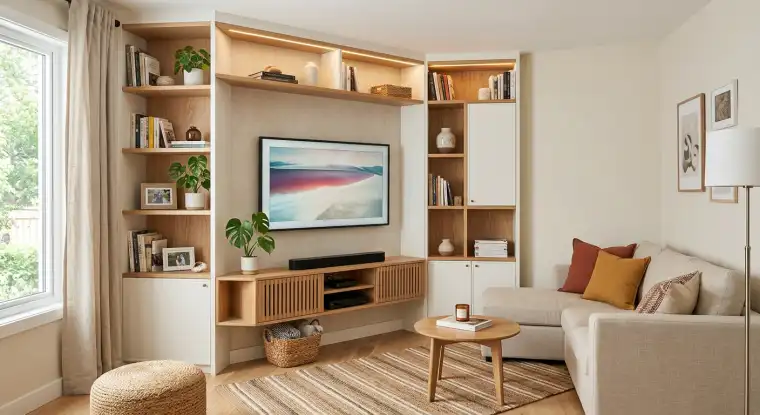
How Creative Layouts Transform Small Living Rooms
Maximize space and style with smart design choices.
Does your small living room feel more challenging than comfortable? Many homeowners find it hard to make the most of limited space.
Imagine a living room that feels open, inviting, and designed for your needs, even if it is small. It is possible with a few changes.
This guide will show you how to transform your small living room into a stylish and functional space. It will show that size does not limit your design goals.
Small living rooms often create a unique design challenge. However, with planning and a creative approach, you can change these spaces into cozy, stylish, and functional areas. The key is understanding how to make the most of every square foot and use design strategies that make the room feel larger. This guide provides tips and ideas to help you create a living room that fits your lifestyle, regardless of its size. We will look at space-saving furniture arrangements, storage solutions, and design tricks to make your small living room feel bigger and more inviting. This guide offers advice to help you reach your design goals, whether you want a modern minimalist look, a comfortable traditional feel, or a budget-friendly makeover.
Quick navigation
Understanding the Challenges of Small Living Rooms
Small living rooms have unique challenges, from limited space to the need for versatile furniture. It is important to know these challenges before you start designing. Overcoming these will help you create a living space that feels comfortable, functional, and stylish.
One challenge is furniture selection and arrangement. Large sofas and oversized coffee tables can make a small room feel cramped. You need to choose furniture that fits the space. Furniture placement is also important. Poorly arranged furniture can limit movement and make the room feel smaller. You must have efficient traffic flow and clear pathways to make the most of your space.
Storage is another concern. Small living rooms often lack built-in storage, making it hard to keep the space clear. Without storage solutions, items can collect and create a visually overwhelming environment. You need to include storage options to keep your living space organized. This might include furniture that serves multiple purposes, wall-mounted shelves, or hidden storage compartments.
Lighting and color also impact the room's perceived size. Dark colors can make a small room feel even smaller, while not enough lighting can create a gloomy atmosphere. You must use light colors to brighten the room and use natural and artificial lighting to create a welcoming feel.
Do you feel overwhelmed by the limited space in your living room? Recognizing these challenges is the first step toward creating a more functional and appealing environment.
Furniture Arrangement: Maximizing Space
Furniture arrangement is one of the most important parts of designing a small living room. Smart choices can greatly affect how spacious and functional the room feels. Understanding furniture arrangement will help you create a layout that maximizes space and promotes a comfortable living environment.
First, think about the focal point of the room. This could be a fireplace, a large window, or the television. Arrange the furniture around this focal point to create a space that looks good. If the TV is the focal point, make sure it is at a good viewing distance. A TV mounted on the wall can save space and create a cleaner look.
Choose furniture that fits the size of the room. Avoid large pieces that can make the space feel cramped. Use smaller furniture, such as a loveseat or a compact sofa. Consider using furniture that serves multiple purposes, such as a sofa bed or an ottoman with storage. This lets you use the space for many purposes without taking up more floor space.
When arranging furniture, create clear pathways. Make sure there is enough space to move around the room. Avoid putting furniture in high-traffic areas. Consider placing furniture away from walls to make the room feel bigger. A corner sofa can be a great space-saving solution. It uses corner space. A smaller coffee table or a set of nesting tables can provide a surface for drinks and decor without blocking movement.
Could rearranging your furniture open up more space in your living room?
Clever Storage Solutions for Small Spaces
Storage is important in small living rooms because it helps keep the space organized. Using storage solutions will maximize your space and improve the room's function. From hidden compartments to space-saving furniture, many options can help you keep your belongings neatly stored.
Furniture that serves multiple purposes is a great way to maximize storage. A sofa bed can provide extra sleeping space for guests, while ottomans with storage can hold blankets, pillows, or other items. Coffee tables with drawers or shelves can offer storage for magazines, remote controls, and other things. Choose furniture with built-in storage to make the most of every piece.
Use vertical space by adding wall-mounted shelves. Shelves can display books, decor, and storage baskets. Floating shelves are a good option because they create a clean look. Consider installing shelves from floor to ceiling to maximize storage. Install a bookcase to store books, display items, and organize media.
Consider storage containers and baskets to put under the sofa or in other hidden spaces. These containers are ideal for storing things you do not use often, such as decorations or extra linens. Use baskets or bins to add style and organization to your living room. Label containers to make it easier to find what you are looking for.
Are you using every available space for storage in your living room?
The Impact of Color and Light
Color and light significantly affect how a small living room looks and feels. Choosing the right colors and using enough lighting can change a cramped space into a bright and inviting environment. These elements can make a big difference in how the room feels.
Light colors can make a small room feel larger and more open. Use light and neutral colors for walls, such as white, cream, or light gray. These colors reflect light, making the room feel brighter and more spacious. You can add color through your furniture, decor, and accessories. This will keep the space from feeling bland.
Lighting is important for creating a welcoming environment. Using natural and artificial lighting is ideal. Maximize natural light by keeping windows clear and using light curtains or blinds. Add artificial light with overhead lighting, table lamps, and floor lamps. Use dimmable lights to change the ambiance. Using mirrors can also reflect light and make the room feel more spacious.
Using color and light can affect the mood and how your living room looks. By making the right choices, you can create a bright and inviting environment.
Have you considered how color and light affect your living room's overall feel?
Adding Personality: Decorating Tips
Decorating your small living room is a chance to add personality and style to the space. You can create a living room that reflects your taste and makes you feel at home, even with limited space. Here are some decorating tips to help you personalize your space.
Start with a focal point. This could be a piece of art, a piece of furniture, or a fireplace. Make this focal point the center of your design. Keep the rest of the decor simple to avoid cluttering the space. This adds interest without cluttering your room.
Use texture and pattern. Use textured fabrics, such as velvet or linen, for your sofa and cushions to add depth. Patterns can create interest. Use a rug with a pattern, or add patterned throw pillows. However, avoid too many patterns, which can make the space feel cluttered.
Use mirrors to make your room feel larger. Mirrors reflect light and create the illusion of more space. Place a large mirror on a wall to reflect natural light or use a gallery wall of mirrors to add style. Consider adding plants to bring life and freshness into your space. Choose small, low-maintenance plants that can thrive indoors. Use pots or planters to add style and personality.
Does your living room reflect your personal style?
What this means for you
Using these layouts and design tips will change your small living room. By planning your space and making design choices, you can create a living area that is stylish and functional.
These ideas let you maximize your space, making your living room feel larger and more inviting. This could involve rearranging your furniture to improve traffic flow or using space-saving storage solutions. The result is a living room that is more organized and enjoyable.
You can create a living room that reflects your personal style. It is a chance to experiment with design elements, colors, and decor to create a space that fits your needs. These design tips will help you create a living room you love, whether you prefer a minimalist, modern, or traditional style.
Risks, trade-offs, and blind spots
While changing your small living room can be exciting, it is important to know about potential risks, trade-offs, and blind spots. This helps you make decisions and achieve the best results.
One risk is overspending. It is easy to get carried away with new furniture and decor, leading to budget problems. Before you start, set a budget. Stick to it. Look for cost-effective solutions, such as DIY projects and shopping at budget-friendly stores, to lower your costs.
Another trade-off is the need to compromise on furniture size and style. You may need to choose smaller furniture to fit the space. If you have a specific furniture style, you may need to make compromises. Focus on choosing furniture that is functional and fits your style.
One blind spot is underestimating the impact of lighting. Not enough lighting can make a small room feel dark and cramped. If you are designing a small living room, use natural and artificial lighting to create a well-lit and welcoming environment. Add mirrors to reflect light and make the room feel bigger.
Have you thought about all the possible problems before starting your living room makeover?
Main points
- Furniture Arrangement: Make your living room layout better by choosing furniture that fits your space and creating clear pathways.
- Storage Solutions: Use furniture that serves multiple purposes, wall-mounted shelves, and storage containers to keep your living room organized.
- Color and Light: Use light-colored walls and natural light to make your room feel brighter.
- Decorating with Mirrors: Mirrors will reflect light and make the room look larger.
- Personalizing Your Space: Add personality to your living room with decor that reflects your style.
- Prioritize a Budget: Create a budget. Stick to it.
- Consider Scale: Remember the importance of furniture that is the right size. Avoid large items.
- Evaluate Lighting: Do not underestimate how lighting affects the feel of your living room.
By using these strategies, you can change your small living room into a functional and inviting space. Start by looking at your current layout and finding areas to improve. Use these design tips. With planning and creativity, you can create a living room you love. Consider decluttering and reorganizing your space with the tips in this guide: Declutter Like a Pro: Comprehensive Guide. You can also explore how to incorporate nature into your living room's design for a more serene experience using the ideas in: Biophilic Home Staging: Expert Tips for Bringing Nature Indoors, and Biophilic Home Staging: Expert Tips for Bringing Nature Indoors.